
Student Accommodation in the UK | University Halls, Student Housing & Student Rooms
Student accommodation is one of the biggest decisions you’ll make before starting university. Whether you’re looking for university halls, private student accommodation, shared student houses, studio apartments or affordable student rooms, choosing the right place to live can affect your budget, daily commute, study environment and overall university experience.
This guide explains the different types of student accommodation available in the UK, how to compare accommodation providers, typical accommodation costs, tenancy agreements, deposits, guarantors and what to check before booking. Whether you’re a first-year student, returning to university or moving to the UK as an international student, StudentUK will help you find accommodation that suits your budget, lifestyle and university.

Join 1,000s of UK Students
Related Student Resources
- 🏠 Student Accommodation
- 💷 Student Finance
- 🏦 Student Bank Accounts
- 📊 Student Budgeting Guide
- 🎓 Student Discounts
- 💼 Student Jobs
- 🚆 Student Railcards & Travel
- 🌍 International Student Guide
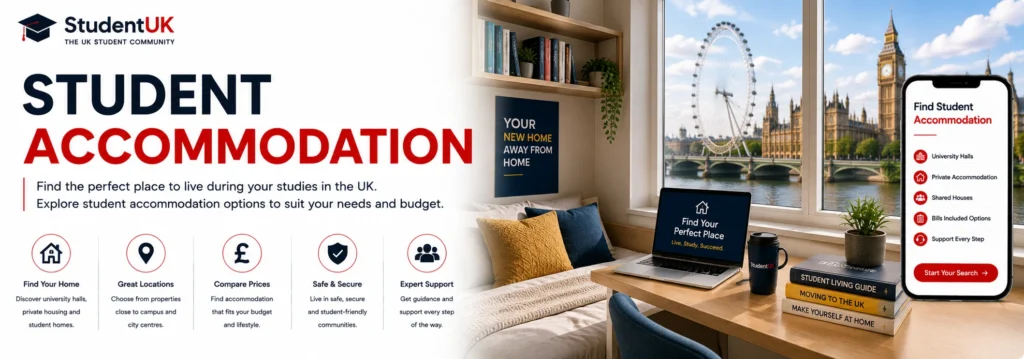
Find Student Accommodation
Finding student accommodation is easier when you compare accommodation by university or city. Whether you’re looking for university halls, private student accommodation, shared student houses, studio apartments or affordable student rooms, StudentUK helps you explore accommodation options throughout the UK and find housing close to your university. Comparing location, room types, facilities, contract lengths and accommodation costs before booking can help you choose accommodation that suits both your budget and lifestyle.
Popular Student Cities
London • Manchester • Birmingham • Leeds • Liverpool • Nottingham • Sheffield • Bristol • Glasgow • Edinburgh • Cardiff • Newcastle

Types of Student Accommodation in the UK
Students in the UK can choose from several types of accommodation, each offering different levels of privacy, independence, facilities and cost. While university halls are often the preferred choice for first-year students, many returning students choose shared houses or private student accommodation. International students may also consider homestays during their first few months while settling into life in the UK.
Living in University Halls
University halls are owned or managed by universities and remain one of the most popular accommodation choices for first-year students. Most rooms are fully furnished and commonly include utility bills, internet access and shared kitchens or communal areas. Living on campus or close to university buildings also makes it easier to attend lectures, access university facilities and meet other students during your first year.
Private Student Accommodation (PBSA)
Purpose-built student accommodation (PBSA) is privately managed housing designed specifically for university students. Many developments include modern facilities such as study rooms, gyms, communal lounges, secure entry systems, laundry facilities and high-speed broadband. Although PBSA generally costs more than university halls, many students value the additional privacy, security and all-inclusive living it provides.
Renting a Shared Student House
Shared student houses are a popular option for second and third-year students looking for greater independence and lower accommodation costs. Renting with friends often provides more living space and can be more affordable than purpose-built student accommodation, although tenants are usually responsible for organising household bills, cleaning and communicating with landlords when maintenance is required.
Choosing a Student Studio Apartment
Studio apartments provide a private bedroom, kitchen and bathroom within one self-contained space. They are particularly popular with postgraduate students, mature students and anyone who prefers a quieter place to study. Although studios are generally the most expensive accommodation option, many students appreciate the additional privacy and independence they provide.
Living with a Host Family (Homestays)
Homestays allow students to live with a local host family instead of renting traditional student accommodation. They are especially popular with international students who want additional support while adapting to life in the UK. Many homestays include meals and utility bills, while also providing opportunities to improve English language skills and experience everyday British life.

Student Accommodation Costs
Accommodation is usually the largest expense you’ll have while studying at university, so it’s important to compare more than just the weekly rent. Costs vary depending on the city, accommodation type and facilities provided, with London generally being more expensive than most other university cities. When comparing accommodation, check whether utility bills, broadband, contents insurance and other services are included, as accommodation with a slightly higher rent may offer better overall value.
| Accommodation Type | Typical Weekly Cost | Best For |
|---|---|---|
| University Halls | £120–£250 | First-year students |
| Private Student Accommodation (PBSA) | £150–£350 | Modern facilities |
| Shared Student House | £90–£220 | Lower living costs |
| Studio Apartment | £180–£400+ | Privacy & independence |
| Homestay | £120–£250 | International students |
Applying for Student Accommodation
Applying for student accommodation early gives you the widest choice of locations, room types and prices. Many universities open accommodation applications after students accept an offer, while private accommodation providers accept bookings throughout the year. In popular university cities, rooms often fill quickly, so it’s worth checking application deadlines and booking as soon as applications open. Before confirming your accommodation, compare several providers, read student reviews, understand what’s included in the rent and carefully review the tenancy agreement and payment schedule.

Student Tenancy Agreements, Deposits & Guarantors
Before booking student accommodation, take time to read the tenancy agreement carefully. Your contract explains the rent, payment dates, tenancy length, cancellation policy and your responsibilities during the tenancy. Many private landlords and accommodation providers also require a UK guarantor, although some accept rent in advance or professional guarantor services for international students. If you’re paying a deposit, check that it’s protected in an approved tenancy deposit scheme where required and make sure you understand the conditions for receiving it back at the end of your tenancy.
Moving Into Student Accommodation
Preparing before moving day makes settling into university much easier. Check what furniture, appliances and kitchen equipment are already provided, keep copies of your tenancy agreement and payment receipts, and save your accommodation provider’s contact details in case you need assistance after arrival. When you move in, complete the property inventory, photograph any existing damage and report maintenance issues immediately. It’s also a good idea to introduce yourself to your new housemates, explore the local area and register with a local GP soon after arriving.

What to Check Before Booking
Before paying a deposit or signing a tenancy agreement, compare more than just the weekly rent. Taking a few extra minutes to review the accommodation carefully can help you avoid unexpected costs and choose accommodation that suits your needs.
✔ Accommodation Checklist
- ☐ Weekly rent and total accommodation cost
- ☐ Utility bills and broadband included
- ☐ Contract length and payment schedule
- ☐ Deposit requirements
- ☐ UK guarantor requirements
- ☐ Cancellation policy
- ☐ Distance to your university
- ☐ Public transport links
- ☐ Building security and facilities
- ☐ Student reviews and ratings
Student Accommodation Tips
Choosing the right accommodation involves more than finding the cheapest room. Apply early to secure the best choice, compare the total cost of living rather than rent alone, check whether bills are included and understand your tenancy agreement before signing. Research the local area, transport links and travel time to campus, read reviews from other students and keep copies of important tenancy documents throughout your stay. Taking time to compare your options carefully can help you enjoy a more comfortable and stress-free university experience.
🏡 Accommodation Guides
Looking for more accommodation advice? Explore our dedicated guides covering every aspect of student housing in the UK.
- University Halls
- Private Student Accommodation (PBSA)
- Shared Student Houses
- Student Studio Apartments
- Student Rooms
- Student Tenancy Agreements
- Student Guarantors
- Student Moving Checklist
- Student Cities
- UK Universities
📚 Explore Student Resources
Explore more StudentUK guides covering accommodation, student finance, budgeting and every stage of university life.
- Student Finance
- Student Bank Accounts
- Student Budgeting
- Student Discounts
- Scholarships
- Part-Time Student Jobs
- International Students
- UCAS Application Guide
- Graduate Jobs
- UK Student Visa
Free Student Chat Rooms for UK Students
Finding student accommodation is easier when you can talk to students who have already been through the process. Join the free StudentUK community to meet prospective students, current university students, graduates and international students from across the UK. Ask questions, share experiences, compare accommodation, discuss university halls, student houses, tenancy agreements, student finance, Freshers’ Week and university life, and receive practical advice from students studying at universities throughout the UK.
Frequently Asked Questions
University halls and many private student accommodation providers include electricity, gas, water, heating and broadband within the rent. Shared student houses may require tenants to arrange and pay for bills separately.
Many private landlords and accommodation providers require a UK guarantor. If you don’t have one, some providers accept rent in advance or professional guarantor services instead.
Apply as early as possible after accepting your university offer. Accommodation in popular university cities can fill quickly, particularly university halls and private student accommodation.
Students can choose from university halls, private student accommodation (PBSA), shared student houses, studio apartments and homestays, depending on their budget, lifestyle and study requirements.
Accommodation costs vary depending on the city and accommodation type. Shared student houses are generally the most affordable option, while studio apartments usually have the highest weekly rent.
Purpose-Built Student Accommodation (PBSA) is privately managed housing designed specifically for university students. Many developments include furnished rooms, study areas, gyms, communal spaces, secure entry systems and utility bills within the rent.
Check the rent, contract length, payment schedule, included bills, deposit requirements, cancellation policy, guarantor conditions and any additional charges before signing.
Most full-time university students are exempt from paying Council Tax, although you may need to provide proof of your student status if requested by your local council.
Complete the property inventory, photograph any existing damage, report maintenance issues, keep copies of important documents and familiarise yourself with your local area and university campus.
Compare accommodation based on location, total cost, facilities, transport links, contract terms, security and student reviews rather than choosing solely on the lowest weekly rent.